
The Lost Generation
1883–1900
“No man can sit down and withhold his hands from the warfare against wrong and get peace from his acquiescence.”
Woodrow Wilson, 1911
The Lost Generation, also called the Generation of 1914, was born at the intersection of the premodern and modern worlds. Their lives were more media-saturated and consumerist than any prior generation by a significant margin, but they could easily recall their childhood days, during which electricity, flight, and automobiles were genuinely alien things. Many men of this era served in or otherwise witnessed the First World War, an industrialized conflict galling in its meaninglessness, preceding the disorienting aftermath of mass death, influenza, urban modernity, and the Roaring Twenties.
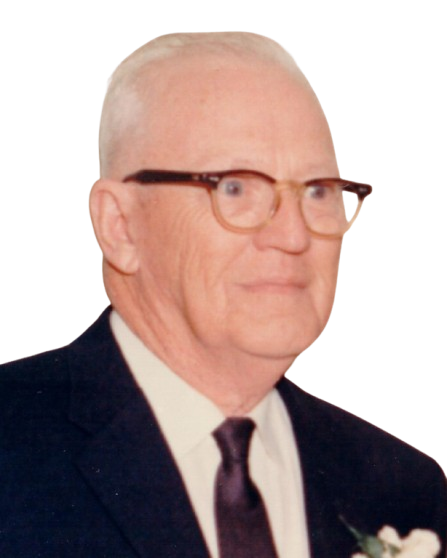 FREDERICK ERNEST BELL. 1892–1973. My paternal great2-grandfather. Fred Bell, known to his descendants as “Pop Bell”, was a travelling fertilizer salesman born in rural Henderson County, Tennessee, on September 10th, 1892, the younger son of Samuel David Bell (1855–1928) and Frances Nancy Teague (1853–1895); each was the second spouse of the other, and Pop hence had eleven half-siblings, five paternal and six maternal. Though he grew up in Henderson County, he crossed the very nearby county line into Madison County and lived in Beech Bluff in early adulthood and remained there for the rest of his life; he was married to Hattie May (“Mom Bell”) by Rev. N. O. Stone at home in Beech Bluff at 3 o’clock on November 15th, 1914, and was married to her for the rest of his life. Together, they raised two children in Beech Bluff: Ed (1916) and Kitty (1918).
Later joined in his work by his son Ed, Pop was a travelling fertilizer salesman for Federal Chemical Company; his territory was in Corinth, Mississippi, as well as Alabama and elsewhere, and he frequently received postcards from the friends he made there. He left on Monday mornings in a car and was out for a week. He sometimes took fishing poles on a rack on the side of his vehicle and fished for crappie. Pop was known to always keep a nice car—a black 1952 Chevrolet; a 1956 Chevrolet Bel Air four-door hard-top that was black and yellow; and a baby-blue 1962 Bel Air with a blue interior. He was regarded by friends and family as sterner than Mom: quiet, gentle, very polite, and courteous, always opening the door for his wife. They both enjoyed life and were very hard workers, as per their grandchildren. He and his wife both wore hats; Pop smoked kit cigarettes, but later in life was a connoisseur of pipes, of which he assembled a good collection that was burned in a house fire after his death. Like many men of his time and place, Pop played cards in his spare time, including pinochle. He passed away in Beech Bluff on October 5th, 1973, aged 81.
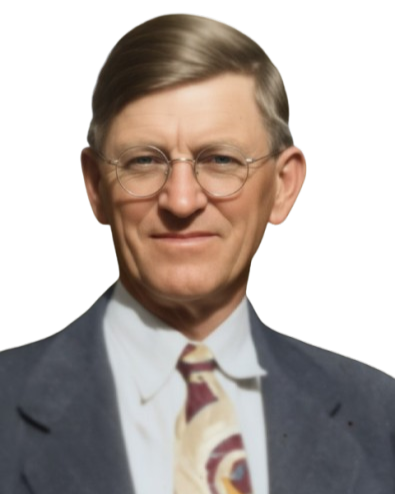 HOMER GREEN BLANKENSHIP. 1886–1961. My paternal great2-grandfather. Homer Blankenship, known to his descendants as “Papa Blankenship”, was a West Tennessean livestock trader born in White Fern on July 23rd, 1886, the second of the four children of William Floyd Blankenship (1859–1922) and Sarah Adeline Thomas (1860–1935). He lived in Beech Bluff and traded livestock for a living as well as maintaining a personal farm; he owned a mule barn in Arkansas and one locally in Beech Bluff. Homer married Maude Bowman in a ceremony solemnized by Rev. C. N. Mattock on February 17th, 1906, and he had three children with her—Merdie Wilma (c. 1907–1909), Curtis Orbra (1908–1993), and Rafe Elco (1910–1983). Merdie died in childhood after eating a banana; Rafe Blankenship’s children, who told me this, also advised me that childhood deaths of obscure causes were often attributed to the last thing they ate.
Homer was a member of the Maple Springs Cumberland Presbyterian Church and Woodmen of the World at a time when the latter comprised life-insurance, sick benefits, parades/drill teams, and a local social network typical of rural fraternal life. He eventually retired from the livestock trade, but continued the supervision of his farm until his stroke of paralysis on December 10th, 1950, at age sixty-four. For the final decade of his life, he was often confined to bed in increasingly poor condition. Many of his descendants primarily remember him this way; still, he was fondly recalled by his grandchildren, who often saw him sitting under a single oak tree in his front yard in a sweater and feeding robins with ground corn. He was a “colorful character” who “never met a stranger”, gregarious and outgoing; he gave local kids nickels to spend at the general store. Bill Blankenship described him as “calm” and “gentle” as well as a fun and cordial storyteller. Details he remembered were Homer’s preference for L&M cigarettes and his wearing of a .32 automatic pistol under his left arm, probably a Colt Model 1903 Pocket Hammerless, as a relic of cash-and-carry trade where men routinely handled money and traveled.
During the final eighteen months of his life, Homer’s condition was critical. He had a hospital bed at home and was treated by Dr. Huntsman of White Fern. After five days of hospitalization at Lexington–Henderson County Hospital, he died on January 2nd, 1961. His long period of limited physical activity and decline upset Rafe Blankenship, who admitted to his daughter that he wished never to die in such a way. However, Rafe did encourage his children to view Homer as he was lying in repose after his death as a way to accept his passing.
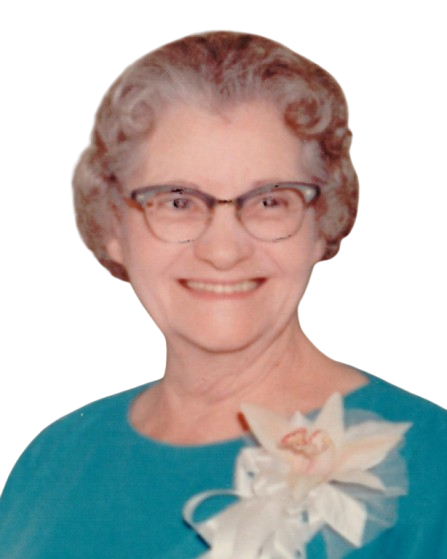 MAUDE ANN BOWMAN. 1889–1977. My paternal great2-grandmother. Maude Bowman Blankenship, known to her descendants as “Mama Blankenship”, was the quiet, industrious mother to the Blankenship family of Beech Bluff. Born in Hardeman County, Tennessee, to James Thomas Bowman (1862–1949) and his first wife, Laura Ann Evans (1866–1912), as the third of their nine children, she spent most of her life in Beech Bluff, where she was married to Homer Blankenship by Rev. C. N. Mattock on February 17th, 1906. There, she and Homer had Merdie Wilma (c. 1907–1909), Curtis Orbra (1908–1993), and Rafe Elco (1910–1983). Merdie died in childhood after eating a banana; Rafe Blankenship’s children, who told me this, also advised me that childhood deaths of obscure causes were often attributed to the last thing they ate.
Maude’s lifestyle was frugal and technologically conservative. She always walked, never obtaining a driver’s license; never had a television, instead listening to radio shows on a radio with a four-foot antenna; didn’t have running water until Homer installed it for her; and used and heated her house with a wood-burning stove. Her hobbies included gardening and canning vegetables: she made a superb corn on the cob, farmed tomatoes and juiced them into quart jars, and cultivated green beans. She wore hats, liked to sew, preferred Clove and Beech-Nut chewing gum, worked in the local school cafeteria serving foods such as rice and oysters, and excelled at cooking. Her grandchildren recalled her as calm, polite, and quiet, neither talkative nor outgoing. She passed away on Monday, July 4th, 1977, in the company of Rafe and Curtis; her grandchildren remember her death-day as a Sunday, however, so it is possible she was ailing the previous day.
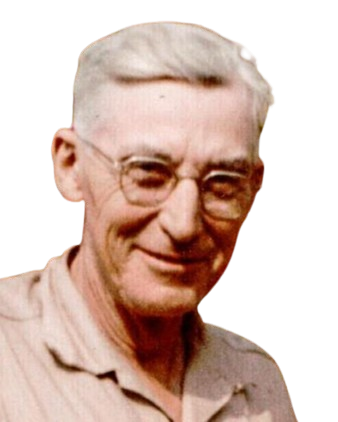 MANLEY CRUTCHER BOWMAN. 1896–1976. My paternal great2-granduncle. Crutcher Bowman, known to his family as “Uncle Crutcher”, was a veteran, farmer and community man of Beech Bluff, Tennessee. Born in rural Madison County, Tennessee, to James Thomas Bowman (1862–1949) and his first wife, Laura Ann Evans (1866–1912), as the sixth of their nine children, he was conscripted into America’s intervention in the First World War as the local draft board rounded up tenant farmers deemed expendable. Just days before he set out for France, he married Mary Edna Warren (1898–1972), with whom he enjoyed fifty-four years of wedded happiness until Edna’s passing on June 10th, 1972. Edna, a schoolteacher hunchbacked in her old age after years of sewing, attained a teaching degree from Union University, and Crutcher’s letters to Edna throughout his time training and overseas survived and became the basis for “Privileged to Spend Blood”, my senior project at the Center for the Study of Tennesseans and War.
Crutcher suffered several profound losses in his formative years. As a youth in the 1910s, he endured the untimely passing of his mother, as well as the tragic deaths of two siblings: an elder brother, Arthur Grady Bowman (1891–1911), and a younger brother, Raymond Everett Bowman (1901–1914), who succumbed to an acne-related infection. Following these hardships, his father, James, entered into a second marriage in 1923 and relocated to Arkansas. The culmination of these familial changes was reflected in James’s 1943 will, wherein he bequeathed a mere $1.00 to Crutcher (10% of one month’s rent for James in 1940), while allocating half of his entire estate to his new family. Living in poverty as a sharecropper, Crutcher was snatched up by the draft board in August 1917, trained at Georgia’s Camp Gordon and arrived in France with the 30th Infantry Division of the U.S. Army II Corps in May 1918. Attached to British command for most of the following months, his unit suffered massive casualties as his British superiors repeatedly hurled Crutcher and his American fellows headlong into action to absorb the worst fighting instead of the British; they punctured the Hindenburg line at the Battle of St Quentin Canal in October 1918. When the war ended the following month, Crutcher hoped to see home quickly, but demobilization was long and arduous and he only set sail for the New World in April 1919. After his return, he struggled with regret from the war; by his grandniece’s account, he never stepped foot in a church again, and his obituary lists no church affiliation, merely calling him a “Methodist”. By the same account, he suffered a groin injury sometime during his service, possibly resulting in his hospitalization at Camp Gordon referred to in his letters, and he never had children.
Even after his return home, Crutcher’s hardships persisted for years. In 1924, he was hospitalized at United States Veterans’ Hospital, No. 60 in Oteen, a neighborhood of Asheville, North Carolina, for an observation period related to pulmonary tuberculosis. He left the hospital early and was unsuccessfully urged to come back by hospital staff and Gordon Browning (1889–1976), a state representative who would later be elected the 38th Governor of Tennessee. Crutcher possessed much signed correspondence from Browning, who also served in the 30th Infantry Division during the First World War and who thus may have been a comrade of Crutcher’s. However, after a few years, he settled into his life at Beech Bluff and became a prominent farmer and rancher, growing corn and raising cattle; the road on which his house was settled is now called Bowman Loop. He and his wife continued to host and attend social events for the remainder of their lives, and Crutcher went on to become one of Beech Bluff’s military registrars; he signed the draft papers of young men during the Second World War. He founded and participated in several agricultural and conservation organizations and was a pallbearer for several local figures; in December 1937, for example, he was pallbearer for W. T. Buck, a Vanderbilt-educated surgeon of Beech Bluff who had also served in the First World War. The 1940 Census listed him as a AAA Chief Clerk in the with a 48-hour workweek. He was a judge for the Beech Bluff Democratic Party primaries in 1947. He was elected to the Circuit’s Jury Commission in 1948.
As Crutcher had no children and appointed my great-grandfather Rafe Blankenship (his nephew) as executor of his estate, his belongings, including his Great War correspondences, receipts, later letters, glassware, and military memorabilia, fell to me. I have always felt a singular responsibility for his legacy and interviewed several of his grandnephews and grandnieces about him. Accounts strongly differed; though all respected him, all had a unique experience with him. “He was a big man,” one grandnephew told me in April 2019, and “he could tell stories like nobody else.” A grandniece, however, described him as described him as a stern man who was not especially talkative at social gatherings and who kept largely to himself. These two were possibly seeing different sides of him: a charismatic man in one-on-one conversations but an isolated one in group settings. Crutcher’s farm and house were well-maintained. He was known to always keep his cars nice—with a fondness for black-painted vehicles—and his home was adorned in sturdy wooden furniture and quilts of his wife’s making. A receipt for a Ford Model T survives in his collections. Crutcher collected the license plates of all of his cars for display on his garage wall, and his white four-door car was passed to his grandniece after his death. He had a fondness for cigars and pipes, and hence smelled distinctively, though not unpleasantly, of a particular cigar brand unknown to us. Outliving his wife by almost for years, Crutcher passed away on April 24th, 1976, aged 80.
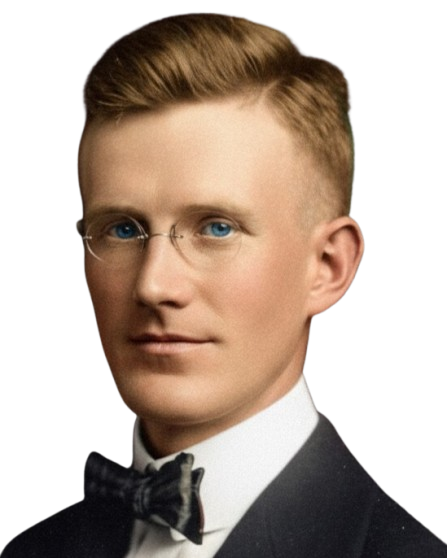 ARTHUR MORGAN CHASE. 1893–1985. My maternal great2-grandfather. Arthur Morgan Chase was a salesman, genealogist and local politician of the Chase lineage, the only student of family history in my lineage before me. Born in Oshkosh, Wisconsin, on January 8th, 1893, to Arthur Edmund Chase (1853–1929) and Alida Eldora Little (1856–1934), he gives a full reckoning of his early life in his incomplete autobiography, My Father’s Son, composed in his older age. The work cuts off as he reaches his young adulthood, during which he married Grace Lupient in Marshfield on May 24nd, 1918. He had eight children with Grace, including Eugene and Jack, though no lines retained the Chase surname.
Arthur was fully raised in Oshkosh and continued to live there until he was aged 23. He attended Oshkosh Normal School (later the Wisconsin State University at Oshkosh), and throughout his life received visits from the school’s faculty and his fellow alumni. As a young man, he was a salesman and businessman, working for a number of companies and organizations throughout his career. He was an officer candidate at the Central Machine Gun Officer’s Training School at Camp Hancock, Augusta, Georgia; he enlisted as a private in the infantry on the 23rd of July, 1918, at Camp Grant, Rockford, Illinois, but the war soon ended and was honorably discharged from Camp Hancock on the 17th of December, 1918; his enlistment number was 3753032. Arthur had also served in the life insurance division of the U.S. Army, and after his honorable discharge, he resumed his responsibilities as a traveling salesman for various corporations. His longest work seems to have been for Wheeling Corrugating Co. and Felker Bros. Manufacturing Co., although in his travels he also worked for the Milwaukee Sentinel as well as for Florida’s Jacksonville Times and for the Florida Citrus Growers Association as a public relations representative. He was a feature writer for the Milwaukee Free Press. On the 1st of July, 1916, Arthur moved to Marshfield, Wisconsin from Oshkosh to become the first Executive Secretary to the newly established Marshfield Businessman’s Association, forerunner of the Chamber of Commerce, and “did much to advance the condition of the local businessmen and the condition of the Marshfield community,” according to a 1991 article about the Marshfield Clinic, which hastened to hire him in late 1916 as a clinic manager. He established “Country and City Day” for the town, featuring plays, meals, games, music, contests and speeches for the townsfolk; he also called for a census and established the town’s first marked street crossings as automobiles became more hazardous to pedestrians.
Karl W. Doege, the Marshfield Clinic’s foremost doctor, had eyed Arthur for employment at the Clinic after observing the actions he took on behalf of the Marshfield Businessman’s Association. A 1991 article on the Marshfield Clinic [download] described Arthur as a “red-haired, professional appearing man who bore ‘an unmistakable resemblance to Franklin D. Roosevelt’,” seemingly in Doege’s words. Doege offered Arthur $1,200 dollars to work at the Clinic, which was “better money than the businessmen paid, so Chase agreed”. He resigned from his position as Executive Secretary in November 1916 to work at the Clinic, and did so for around one year before apparently moving to Madison, Wisconsin, after his marriage. During his time there, he took a nearly month-long trip in July 1917 to a summer session of the “American City Bureau” at Point Chautauqua, New York, and reported seeing “many interesting things while on the tour”, according to an August 1917 edition of The Marshfield Times.
In 1919, he was reported as the secretary of the Chamber of Commerce of Sarnia, Ontario; his eldest daughter was born there. He thereafter returned to the United States. Serving as secretary of what later become the Central Wisconsin Chamber of Commerce, Arthur was involved in the early programming of WLBL (930 kHz) in 1924. He said his family and the station hosted radio pioneer Ernst Alexanderson for a weekend in 1925, and that he found that a ship between Tasmania and Australia was receiving Arthur’s announcements; the 1975 Stevens Point Journal article detailing this lists “Enemies of Sleep”, a Saturday community midnight program, was the program in question. In August 1936, Arthur shook hands with Kansas Governor Alf Landon, the Republican presidential candidate for that year, at a rally in DeKalb; he told Kenosha News that he believed Landon would be “the next president of the United States”. Landon was soundly defeated (523–8) two months later in the largest landslide since the dawn of the two-party system. In 1937, Arthur was listed as the secretary of the Stevens Point Chamber of Commerce, in much the same fashion as the post he held in Marshfield before the War. He founded the Kenosha American Association of Retired Persons and served on the Kenosha Police and Fire Commission. The 1950 Census noted that he earned a salary of $4,700 in 1949. Singing in barbershop quartets and having what his granddaughter Lisa Rasmussen-Zanin described as a “resonant” singing voice, Arthur later acted as the chairman of the music committee at the First Congregational Church in Kenosha, which disbanded in 2013. He retired from salesmanship in 1958.
Arthur’s relationship with his elder children was strained; he was a harsh father to them, controlling, and a bitter physical disciplinarian. His years, however, softened him; he is said to have been a kind grandfather with a “jovial” side remembered by Lisa, who recalls him toying with a wind-up cymbal-smashing monkey in his study and playing the board game Wahoo, mainly with his wife, on the kitchen table by the window in the evenings. He made the boards himself in retirement. He kept up an active lifestyle in his later years, describing in a 1976 letter that, even at age 83, he walked “three or four” miles daily and tried to eat out once per day when possible. He was so fascinated by genealogy and the idea of family history that he worked frequently with the Kenosha library on recording Chase history and even traveled to England circa 1968 to learn more of his heritage, visiting the estate they rented at Hundridge in the late medieval period. He was pleased to sight the Shannon River in Ireland from an airplane across the Atlantic, a sight described to him by Grace’s grandmother Mary Frances Cushing (1847–1921) half a century earlier. Some of his writings were preserved in the Chase portion of the library in Kenosha. He moved to Tallahassee in 1981, where he lived at 1313 Tom Still Home and passed away on the 19th of December, 1985, aged 92, afflicted with Alzheimer’s. Arthur’s parents had lived in Florida for some time, and he had found work in Florida during his youth. He insisted that a Mason preside over his funeral; Arthur was initiated in the Entered Apprentice Degree of Freemasonry on October 8th, 1920 at Marshfield Lodge No. 224, and passed to the Fellow Craft Degree on May 23rd, 1947. Ten months after being raised to the Master Mason Degree on February 16th, he resigned from Marshfield Lodge No. 224 on November 15th, 1948 to join Kenosha Lodge No. 47. Upon that date, his Masonic membership number was M016144, and he was in good standing with the Grand Lodge of Wisconsin, which he entrusted with his burial.
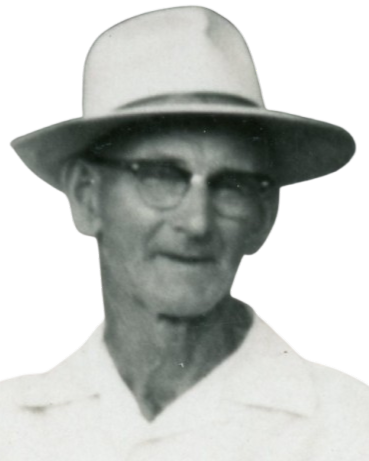 WILLIAM BURLEY CHURCHWELL JR. 1891–1971. My paternal great2-grandfather. Burley Churchwell was a farmer born on September 9th, 1891, in Fulton County, Kentucky, to 66-year-old Mexican–American War veteran Arthur Brown Churchwell (1825–1911) and his second wife, 20-year-old Mary Josephine “Mollie” Weaver (1871–1953), as their second and final child. Within a year of his birth, the two had separated, and in 1900 Mollie remarried John Wesley Ward (c. 1865–c. 1915), with whom she had four further children, two of them during a few years’ residence in Texas. “My dad was just a kid when she died,” one of her great-granddaughters told me in May 2025, “but he does remember her being quite a feisty character.” John died some time after the 1910 Census and Mary died in 1953 in Tiptonville having remarried at least once more, but it was in her probably turbulent early home that Burley was raised. By his young adulthood, Burley had settled in Crockett County, where he married Sadie Smith (1897–1950) on February 14th (Valentine’s Day), 1912. The two would go on to have fourteen children, one of whom was my great-grandmother Jewell Churchwell Via. Three of their children predeceased them, including Frazier Churchwell.
Burley farmed cotton and corn in the Alamo community of Crockett County. He was, by many accounts, an abusive and callous man. He forbade many of his children from attending high school and owned a whip to thrash them. According to his youngest daughter, three of his children inherited his “hatefulness”. However, by the testimony of a grandson and step-granddaughter, he was a much more decent man in his old age. His grandson recalled that when he visited Burley with his wife, the first thing Burley did is bring out a big watermelon and forcefully split it in two as a gift for them. He loved to watch wrestling, which awoke a childlike excitement in him, and he had a garden with peas, lima beans, cabbage, and other crops to eat. His age and second marriage to Crockett County widow Ada Frances Goldsmith Clark (1887–1981), four years his senior, are thought to have mellowed him. He died in Crockett County on June 1st, 1971, aged 79.
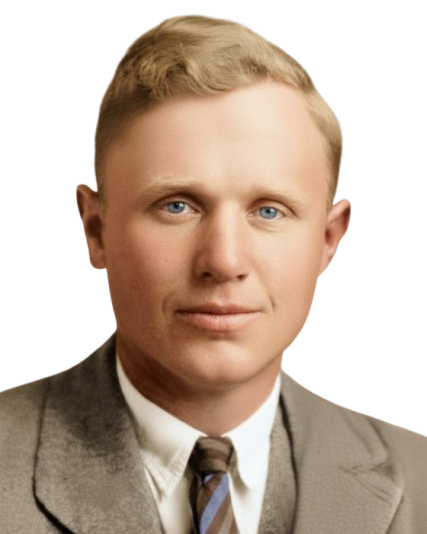 ODIE ELWOOD FORRESTER. 1897–1984. My great-grandfather, the father of my maternal grandmother. Odie Elwood Forrester was a West Tennessean farmer born in rural Henry County on October 9th, 1897, to Francis Marion “Frank” Forrester (1872–1947) and Louisa Prince (1872–1943), as the second of nine siblings. His family moved to Weakley County when he was a young boy, and Odie never left. There, aged just sixteen, he married the twenty-year-old Ida Onie Brandon (reputedly beautiful and from a well-off family) on July 4th, 1914, and welcomed his first daughter the following May. His children remarked to me that he wanted to serve in the Great War when America intervened in 1917, but, being a farmer and young father, was not allowed to enlist. After having five children, four of whom survived to adulthood, Ida died of tuberculosis in 1927, aged thirty-three. Two years later, and through uncertain circumstances, Odie married Kentucky-Appalachian Goldie Baldridge, with whom Odie would have another ten children and with whom he would remain married for the fifty-four years until his death.
Like his father, who was so short he was nicknamed “Peanut”, Odie, at 5’4”, was a small man even in his time. He hauled ice on a mule-drawn wagon as a young man and later farmed Indian corn (flint corn), tobacco, sweet potatoes, cotton, and, uniquely, peanuts; he and his wife had a garden with green peppers, green beans, Irish potatoes, and tomatoes. He conceived of himself as a Scotchman despite his overwhelmingly English ancestry and spoke a dialect strongly identified with Appalachian English by his grandchildren; one granddaughter said he sounded remarkably like moonshiner Marvin “Popcorn” Sutton (1946–2009). His reputation varied among his descendants, some of whom alleged indecent parenting and inappropriate behavior towards his daughters; asked for a statement about his and his wife’s characters, one of his daughters merely responded: “well, they raised fourteen children”. Odie died in Martin, Tennessee, on June 21st, 1984.
His middle name is somewhat unclear. He signed—in shaky, uneven handwriting—Odie (or possibly Odis) Elwin Forester on his 1918 draft card, but, more firmly, Odie Elwood Forrster on his 1942 card. The 1942 card is written in three different hands, suggesting Odie had help, and the misspelling of Forrester on both is not encouraging. However, because of the frequency of Elwood as a middle name in Odie’s time, I have elected to use it here.
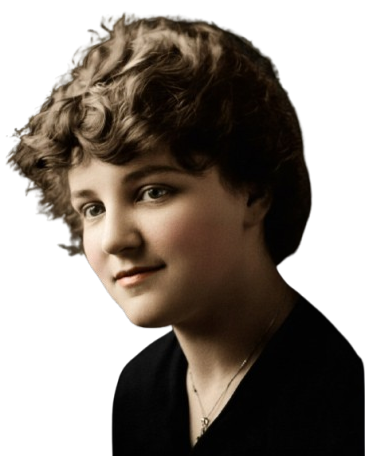 GRACE LETTICIA LUPIENT. 1896–1973. My maternal great2-grandmother. Grace Lupient, in the words of her future husband Arthur Chase, “was born in a primitive log cabin on Abraham Lincoln’s birthday; a few miles from Marshfield which city was surveyed and platted by her grandfather, John Bell Grieves, a Canadian Scotsman who had settled near Marshfield. John Bell Grieves’ father was of the same name, who was born in lower Roxborough County, Scotland, near the border of England. His son was also born there. The family immigrated to Pond Mills, now a suburb of London, Ontario, shortly after 1800.” She married Arthur Morgan Chase in Marshfield on May 24nd, 1918, and the two remained wedded for the rest of their lives, raising eight children together.
Known as “Lupie” in high school, Grace was her class vice-president and treasurer and a member of the glee and declamation clubs. Her senior quote was “Variety is the spice of life.” Before her marriage, she was a bookkeeper at the Tiffault-Kamps store in Marshfield. During her marriage, she remained highly communally active; she was thoroughly involved in parent-teacher work in Kenosha, where she was publicly known as a parent and involved in the lives of her children. In 1961, she submitted a dinner-prayer used by her and her four youngest daughters (the “Little Women”), which was published in the 10 March 1961 Chicago Daily Tribune:
And friends who help each day;
For the food we eat and the clothes we wear,
For all the gifts Thy children share;
For work and rest and play.
Amen
Her obituary states that she was a member of Kenosha Chapter 92, Order of the Eastern Star; the Civic Council, Book Lovers club, Republican Women, the Past Presidents club of the PTA, Kenosha Women’s Club, Kenosha County Historical Society, and the League of Women Voters, a testament to her civic activity. One granddaughter, Lisa Rasmussin-Zanin recalled her as very calm; she fondly remembered Grace’s lilac-scented handkerchiefs as well as the potted African violets on her window sill. Grace also cared for and liked parakeets in three big cages in the kitchen. She passed away on March 20th, 1973, in Kenosha.
Some confusion seems to exist on genealogical websites about her middle name. It has been given, unsourced, as Luella, presumably because someone saw the middle initial “L.” and thought it referred to her mother, Luella Mary Grieves (1876–1946). Arthur Morgan gives “Letticia”, as does her birth certificate; her name, in fact, seems directly taken from two aunts who died prematurely, the maternal Grace Grieves (1872–1891), who died of general peritonitis; and the paternal Letticia Lupient (1867–1884), who died of diptheria.
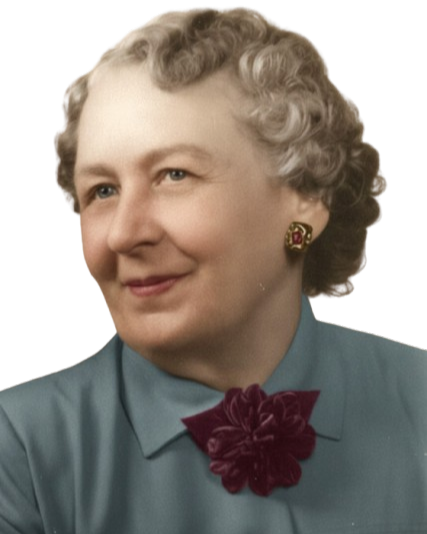 HATTIE LOU MAY. 1892–1986. My paternal great2-grandmother. Hattie Lou May Bell was known to her descendants as “Mom Bell”; it is as Mom that she was most remembered by the time I researched her, and so it is as this that she is primarily remembered. Born in rural Madison County, Tennessee, to mule-and-buggy mail carrier James Alexander May (1864–1929) and Mary Calvin “Callie” Adams (1862–1939), as the second of their six children, she lived her whole life in Madison County, where she was married to Fred Bell by Rev. N. O. Stone at home in Beech Bluff at 3 o’clock on November 15th, 1914. Together, they had two children, Ed (1916) and Kitty (1918), who likewise lived in Beech Bluff. Described by their grandchildren as “the perfect couple”, “Mom and Pop” were inseparable and affectionate for their fifty-eight years of marriage.
Mom’s lifestyle was not as premodern as that of Mama Blankenship; though she, too, never obtained a driver’s license, she did own a car, and rode along with Pop on his travels as a salesman. The two were avid fishers, and their garage was home to about twenty fishing poles, some of them twenty feet or longer. They enjoyed eating them, too. Mom was a proficient cook, especially known for her so-called “corn lightbread”, a light, moist, cake-like cornbread. She was a connoisseur of grape wine and kept a shot of it at her bedside for consumption each night—when Ed took her wine away from her during a visit to Ed’s house, she literally had Kitty get her to take her home; she especially enjoyed Mogen David wine from her grandson Bill Blankenship. In her staunchly individual nature, she was described as a “firecracker” by her granddaughter Nancy Blankenship, and was talkative and very opinionated about people. Nonetheless, she was a hard worker, a caring friend, and a devout Christian who studied the Bible. Her insistence on staying with her children in old age put off Kitty, who wished not to repeat the same with her own children; Mom died in Beech Bluff on March 4th, 1986, aged 93.